




Learning Objectives
The primary learning objective for Amira is to accelerate early literacy development in students aged 4–14 by using AI-driven oral reading assessments and real-time feedback to improve fluency, decoding, and comprehension skills.

Reading
Last updated: November 17, 2025
The primary learning objective for Amira is to accelerate early literacy development in students aged 4–14 by using AI-driven oral reading assessments and real-time feedback to improve fluency, decoding, and comprehension skills.
Widely adopted in 20 countries
2 languages
Target audience: Educators and teachers, Students, Institutional or administrative staff, Parents or guardians, Other (please specify)
Early Childhood Education, Primary Education, Lower Secondary Education
Limited offline functionality
Interactive whiteboard

The information presented is provided by the company, and reviewed in good faith. Learning Cabinet is not responsible for inaccurate content.
How this product was evaluated?


Amira Learning is grounded in the Science of Reading and integrates evidence-based theories including Automaticity Theory, Zone of Proximal Development (ZPD), and Formative Assessment Theory. These theories shape Amira’s design to provide real-time, adaptive reading practice and feedback through AI-driven oral fluency assessments. Amira uses a logic model, has impact validated through third-party studies and benchmark-aligned progress monitoring. See attached document and links for more details.

Amira Reading Suite shows a proven positive impact, backed by at least one experimental study that shows a statistically significant positive impact on the intended learning outcomes.
Different levels of research evidence indicate the reliability of the proof of positive impact. The solutions featured in the Learning Cabinet range from:

High-usage students showed greater literacy gains (higher WCPM, ESRI, vocabulary scores) with more Amira sessions. Frequent usage drives development, with 0.45 effect size in reading ability after 30 sessions.
A significant, positive link was found between total minutes spent on Amira and K-3 DIBELS scores, and between session minutes/passages read and Grade 4-5 LEAP ELA scores. Higher usage led to better outcomes.
Structured Literacy (SL) students showed greater Grade 3 English literacy gains beginning-to-end of year. In Spanish, SL students significantly outperformed non-SL peers at mid-year and end-of-year across grade bands.
Students using the Reading Tutor made significant gains in oral reading fluency and advanced their reading materials by a full grade level. Gains were slightly larger with the Reading Tutor compared to regular classroom instruction.
This study found Amira's foundational technology significantly improved literacy (effect sizes 1.14-1.82) for low-income students, also lessening reading decline during school breaks. Fluent readers showed no significant impact.

Recommended use
Recommended frequency: 3–5 times per week; Session duration: 10–20 minutes per session Designed for: Primarily individual student use, supported by teacher dashboards and group-level data tracking. Amira is ideal for Tier 1 fluency practice, as well as Tier 2 and 3 reading intervention.
Recommended frequency: 3–5 times per week; Session duration: 10–20 minutes per session Designed for: Primarily individual student use, supported by teacher dashboards and group-level data tracking. Amira is ideal for Tier 1 fluency practice, as well as Tier 2 and 3 reading intervention.

Target audience
The primary learning objective for Amira is to accelerate early literacy development in students aged 4–14 by using AI-driven oral reading assessments and real-time feedback to improve fluency, decoding, and comprehension skills.
Amira Learning is grounded in the Science of Reading and designed to accelerate foundational literacy development for students in PreK through Grade 5. The platform integrates evidence-based practices into a structured, adaptive reading experience that supports both instruction and assessment.
At its core, Amira targets the five pillars of early literacy—phonemic awareness, phonics, vocabulary, fluency, and comprehension—through a curriculum that adapts in real time based on individual learner performance. The system listens to students as they read aloud, analyzes their fluency and decoding skills, and provides personalized feedback and micro-interventions on the spot. These interventions might include decoding assistance, phoneme segmentation, or vocabulary clarification, enabling students to correct errors and build reading confidence as they progress.
The platform’s content includes a diverse library of over 4,000 leveled texts, carefully curated to align with Lexile bands and literacy development stages. Stories feature culturally responsive characters and themes, designed to build student engagement while systematically increasing complexity. Amira’s AI ensures that each learner engages with texts matched to their skill level, creating a scaffolded learning path toward fluency and comprehension.
Designed to align with U.S. state standards such as the Common Core (CCSS), Texas Essential Knowledge and Skills (TEKS), and Oklahoma Academic Standards (OAS), Amira also supports international implementation through its adaptability to global and local literacy frameworks. The platform is fully bilingual in English and Spanish, with future capacity to expand to additional languages and scripts.
Instructionally, Amira supports delivery within Multi-Tiered Systems of Support (MTSS) and Response to Intervention (RTI) frameworks. Teachers can use Amira for Tier 1 universal screening, Tier 2 small-group differentiation, and Tier 3 targeted intervention, supported by robust dashboards that track progress, surface risk indicators, and guide instruction.
Underpinning the design are principles of Universal Design for Learning (UDL) and formative assessment, ensuring that students of all backgrounds, abilities, and reading levels receive equitable access to instruction and meaningful feedback. The system is optimized for low-bandwidth and low-cost devices, promoting digital equity across diverse learning environments.
Through this blend of adaptive technology, validated literacy pedagogy, and real-time analytics, Amira Learning offers a comprehensive solution to support early reading proficiency at scale for students across the globe.
Amira is grounded in the Science of Reading & uses cognitive research to deliver structured, adaptive literacy experiences. Its design incorporates Automaticity Theory by emphasizing fluency to free cognitive resources for comprehension, & applies the Zone of Proximal Development by adjusting AI feedback within each learner’s instructional range. Formative assessment is embedded through real-time oral reading analysis, enabling targeted teacher intervention within an MTSS framework. Drawing on Cognitive Load Theory, Amira sequences tasks to minimize overload while supporting skill acquisition.


Amira’s interface is designed with early readers (PreK–Grade 8) in mind, incorporating:
Amira conducts regular usability testing with students, educators, and instructional designers. Examples of UX/UI improvements based on testing:
Amira’s product team continuously monitors:
These data are used to:
Insights from pilot studies and district-wide implementations feed directly into the product roadmap.
Amira was originally developed for U.S. K–8 public schools, with alignment to U.S. literacy standards (e.g., CCSS, TEKS, GSE).


Amira uses a tiered, volume-based pricing strategy to promote accessibility and scale. Examples include:
National or regional pricing agreements, with discounts based on:
Amira also offers free trials and proof-of-concept pilots in partnership with ministries or agencies.
Pricing decreases with scale and increases with additional modules or integrations. Base price runs $7.50 up to $32 per user, with additional options for support.
Yes, Amira offers pricing that takes into account:
Amira works with global NGO and donor partners to subsidize or co-fund implementations in emerging markets.

 Nationwide government projectsRegional or state government projectsLocal government projectsPartnership models with national institutions
Example 1 – Oklahoma State Department of Education: Implemented Amira as an official K–3 literacy screener across over 400 districts, reaching approximately 130,000+ students statewide, aligned with state MTSS and dyslexia legislation.
Example 2 – Georgia Department of Education: Selected Amira as part of Georgia’s Reading Readiness initiative and rolled it out to multiple districts for fluency screening and intervention, including integration with state dashboards and training infrastructure.
Example 3 – International Pilots:
Colombia: Spanish language literacy pilot in partnership with local edtech organizations.
UAE and Nigeria: Pilots conducted in low-connectivity and multilingual contexts.
Amira Reading Suite fulfils the WCAG 2.1 level AA requirementsAutomatic toolsExpert validation (using free NVDA screen reader)Person with disabilityAmira Learning is designed to be equally accessible to girls and boys, yet we recognize that structural and societal factors can influence how learners of different genders experience and benefit from the product.
In our research and field observations, we have noted that girls often outperform boys in early literacy measures, which can sometimes lead to under-identification of boys who need support. Amira helps address this disparity through objective, real-time assessment and AI-driven scaffolds that flag reading difficulties based on performance—not teacher perception—ensuring that all students receive targeted support regardless of gender.
In certain contexts, especially in low-income or rural households, gendered responsibilities and mobility restrictions may limit girls’ access to digital tools. To mitigate this, Amira is optimized for short, flexible use sessions and can be accessed on low-cost, shared devices—enabling learning during limited windows of availability and without requiring high levels of adult supervision. Its low-bandwidth functionality further supports use in regions with unstable connectivity, where access may be constrained by household priorities or infrastructure.
We also acknowledge that girls and women often carry greater caregiving responsibilities, which can limit time for education or engagement with their children’s learning. Amira addresses this by including simple, automated progress reports and home access options, allowing caregivers—regardless of literacy level or time constraints—to support reading development with minimal additional burden.
By collecting and analyzing sex-disaggregated usage data, Amira can continuously monitor for engagement gaps and tailor training, support, and product improvements to promote gender-equitable outcomes.
In sum, while Amira is designed for universal usability, we remain attentive to the structural gender inequalities that can shape learner access and outcomes, and we actively design features and implementation strategies to reduce these barriers.


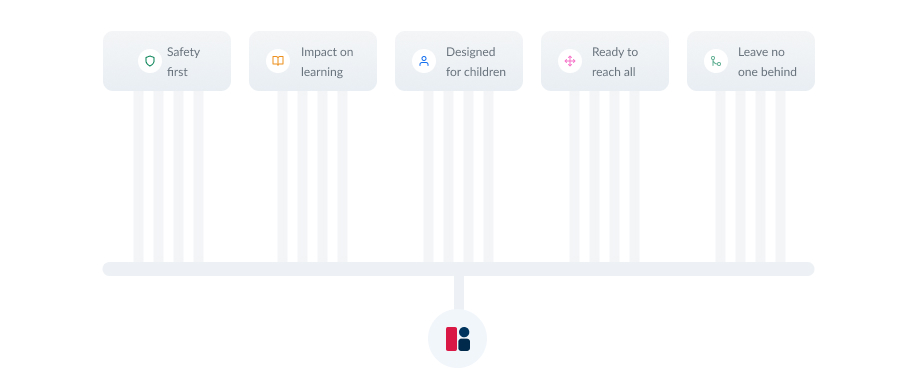
Evaluated using the Learning Cabinet’s rigorous EdTech for Good Framework to ensure safety, learning impact, scalability, and inclusion for all learners.
Reading
Amira Learning is an AI-powered reading tutor and assessment tool that listens to students read aloud, provideAmira Learning is an AI-powered reading tutor and assessment tool that listens to students read aloud, provides real-time feedback, and helps educators improve literacy outcomes through adaptive practice and actionable data.
Wide reach

Wide reach
Reading
Read Along is a reading app that helps young learners have fun while they learn to read. Read Along has an in-Read Along is a reading app that helps young learners have fun while they learn to read. Read Along has an in-app reading buddy that supports learners as they read aloud, offering assistance when they struggle, plus rewards them with stars when they do well – guiding them along as they progress.

Wide reach

Wide reach
Reading
eKidz is an award-winning app that makes acquiring literacy and a new language easy and accessible for every ceKidz is an award-winning app that makes acquiring literacy and a new language easy and accessible for every child utilizing a purpose-built AI voice recognition students with precise diagnostics and support.

Moderate reach
Moderate reach


