Enuma School Logo

Enuma

Enuma

Mathematics

Reading

Writing

Languages

21st century skills

Enuma School is a personalized, inclusive, and tablet-based learning application designed to help children develop foundational literacy and numeracy skills at their own pace.
website

Last updated: March 25, 2025

Overview

Learning objectives

Enuma School is a personalized adaptive learning application that offers an inclusive scaffolded curriculum with thousands of engaging activities designed to help children develop foundational literacy and numeracy skills at their own pace.

Evidence of impact

STRONG

Cost structure

2 Pricing models

Widely adopted in 3 countries

4 languages

Target audience: Educators and teachers, Institutional or administrative staff

Early Childhood Education, Primary Education, Non-formal Education

Full offline functionality

Smartphone, Tablet, Chromebook

Thumb Video 1
Enuma School
Enuma School
Enuma School
Enuma School
Enuma School
Enuma School
Enuma School
Enuma School
Enuma School
Enuma School
Enuma School

The information presented is provided by the company, and reviewed in good faith. Learning Cabinet is not responsible for inaccurate content.

How this product was evaluated?

Product Details

Data protection and privacy

Privacy

  • Privacy Policy icon
    Privacy PolicyOpen info in a new page
  • Terms of Service icon
    Terms of ServiceOpen info in a new page
  • Product alerts users of significant changes to the privacy policy icon
    Product alerts users of significant changes to the privacy policy

Data Sharing

  • Product does not share data with third parties icon
    Product does not share data with third parties
  • Product does not show external advertisements icon
    Product does not show external advertisements

Data Origin

  • Product does not utilize AI icon
    Product does not utilize AI
  • AI has not been trained using product datasets icon
    AI has not been trained using product datasets

Information security

  • Cybersecurity program in place icon
    Cybersecurity program in place
  • Technical best practices in place icon
    Technical best practices in place
  • Threat detection in place icon
    Threat detection in place
  • No self-assessments conducted icon
    No self-assessments conducted
  • No third party assessments conducted icon
    No third party assessments conducted

Safeguards

  • Product does not allow interactions between users and users cannot create content icon
    Product does not allow interactions between users and users cannot create content
  • Product does not use AI to generate content icon
    Product does not use AI to generate content
Theory

Enuma School* integrates Discovery Learning, Universal Design for Learning (UDL), and gamification to deliver personalized, adaptive, self-paced learning. Through a spiral curriculum, students advance through scaffolded lessons using games, books, and videos. Learning is tracked through ongoing assessment: initial diagnostic quizzes establish baselines, while unit quizzes, review sessions, and playtime metrics track ongoing progress and engagement. (*Enuma School is the sequel to Kitkit School).

Strong evidence of impact

Impact 3/3

Enuma shows a proven positive impact, backed by at least one experimental study that shows a statistically significant positive impact on the intended learning outcomes.

Different levels of research evidence indicate the reliability of the proof of positive impact. The solutions featured in the Learning Cabinet range from:

  • Strong: Backed by at least one experimental study that shows a statistically significant positive impact on the intended outcomes.
  • Moderate: Backed by at least one quasi-experimental study that shows a statistically significant positive impact on the intended outcomes.
  • Promising: Supported by correlational or pilot research that indicates positive or promising results on the intended outcomes.

Evidence
External Evidence
Randomized Control TrialsOpen
Open link icon

An RCT for the Global Learning XPRIZE showed Kitkit School* increased reading fluency in the treatment group from 0.7 to 9.7 words/min, while the control group went from 0.5 to 2.5. Non-readers dropped from 93% to 55% in the treatment group.

External Evidence
Pre-Post StudyOpen
Open link icon

In Cox's Bazar refugee camps, Kitkit School* raised ASER literacy levels by 0.21. Non-readers dropped from 71.6% to 47.5%. ASER numeracy levels rose 0.33, with students unable to identify double-digits falling from 83.3% to 46%.

Engagement
Icon representing engagement statistics

Recommended use

Early Childhood Education, Primary Education, Non-formal Education

For progress, use Enuma School three times weekly. The "Learning Course" offers 15-20 minute sessions with curriculum-focused content, while "Library Mode" allows free exploration of unlocked materials. Suited for individual and group use, it adapts to diverse educational contexts.

For progress, use Enuma School three times weekly. The "Learning Course" offers 15-20 minute sessions with curriculum-focused content, while "Library Mode" allows free exploration of unlocked materials. Suited for individual and group use, it adapts to diverse educational contexts.

Icon representing engagement statistics

Target audience

Students, Teachers
Limited
reach
3
Countries

Learning Objectives

Enuma School is a personalized adaptive learning application that offers an inclusive scaffolded curriculum with thousands of engaging activities designed to help children develop foundational literacy and numeracy skills at their own pace.

Convocation hat icon

Curriculum

  • National curriculum
  • Global curricular frameworks
  • Adaptable to different curriculums

Information about curriculum

The Enuma School English curriculum offers over 300+ books and videos, as well as 1000+ learning activities, supporting more than two years of play-based learning. Aligned with leading EFL research, U.S. Common Core, and WIDA Standards, it covers content up to second-grade level in English-medium schools. The curriculum progresses from introducing the English alphabet to category-based vocabulary, high-frequency words, phonics, blending, and simple sentence construction. It encompasses key areas such as listening, reading, writing, speaking skills, grammar, and common phrases. Books include comprehension quizzes, and videos focus on pronunciation and conversation skills. This comprehensive approach ensures a strong foundation in English, from alphabet recognition to basic conversational abilities, catering to young EFL learners globally. The math curriculum, aligned with US Common Core Standards from early childhood through grade 2, covers foundational skills including number sense, operations, and shapes. The program features over 80 math videos, including instructional content and songs for concept memorization. As children advance through the units, they encounter similar games at more difficult levels, as well as new games to address complementary skills. Starting with pattern recognition and visual processing, children advance to counting, writing, and representing numbers up to 10, then to comparing and ordering numbers. Key areas of focus include number identification, addition, subtraction, multiplication, shapes, mathematical reasoning, and telling time, among others. The curriculum also integrates literacy through math-focused books and videos in English, covering numbers, operations, shapes, and word problems. We have localized versions of Enuma School where we provide an additional native language subject. We ensure that our learning content is aligned with local curriculum and culturally appropriate by working with local experts and NGOs who best understand the challenges and needs on the ground so that we can fine tune our software and tailor our approaches accordingly. As an example, when we built the library of Enuam School books for Indonesia version, we designed 60 books modeled on the values of the Indonesian character education empowerment movement, known as Penguatan Pendidikan Karakter (PPK), which are seamlessly integrated. Each value is introduced through captivating stories that resonate with Indonesian children's daily lives, culture, and habits.

Pedagogical design

Per the Discovery Learning Model, learners can freely explore content that builds in complexity, treating each attempt as learning progress. Following UDL principles, our educational content has representation through multiple learning formats (games, books, videos), expression through diverse activities (reading, writing, listening), and engagement through interactive experiences. Our gamification approach ensures stress-free progression with unlimited attempts and fun reward systems. Thus, learning is inclusive and engaging for diverse learners, including those with ADHD and autism.

Accordion toggle
Additional Details
Flexibility
The product allows learner agency (e.g. it provides flexibility for the learner or teacher to make choices, take actions, or influence their learning outcomes and experiences).
The product supports adaptive personalized learning, including tailoring instruction and content with feedback to the unique needs, preferences, and goals of each learner
Learner engagement
The product has elements that raises the level of affection in learner (e.g. pedagogically meaningful narrative, characters, etc.).
The product has interactive design where a learner can interact with the content via different actions, like for example solving problems.
Creativity
The product includes problem-solving activities

User Experience

Accordion toggle
User interface
Enuma School has proven to accommodate diverse learners through our straightforward user interface, including out-of-school children in Pakistan, students with varied learning abilities in Sri Lanka, refugee children, and those with limited digital exposure or technological literacy. Our UI enables quick comprehension of their progress within the curriculum and ensures clarity in menu navigation to prevent any confusion regarding their current location. From the design phase, our focus has been on presenting essential learning components, thereby minimizing the necessity for users to memorize UI navigation. For instance, the overall UI layout follows a hierarchical tree structure with the top menu serving as the root, eliminating the need for a global navigation bar (GNB). This design enhances navigation depth while allowing children to easily return to previous screens using a consistent back button placement. Furthermore, learners can access their daily lessons effortlessly with minimal navigation. A single tap on the designated button directs them straight to their daily learning activities. For one of our projects, we noticed that students weren't grasping the purpose of the stars they collected or understanding their connection to badges. To address this, we redesigned the reward screen to be more intuitive. We added enhanced audio-visual effects for item acquisition, made buttons more prominent, and implemented notifications for newly earned badges. These changes have significantly improved the user experience, making the reward system both clearer and more engaging for our young learners.
Accordion toggle
Data-driven product development
At the core of our product development process is a deep understanding and empathy for our users. We approach every project with flexibility and open-mindedness, always seeking the best ways to reach and support our users. Our mission is to create programs that empower both conventional and unconventional learners to build strong foundations in literacy, math, and English as a Foreign Language. To achieve this, we continuously evolve our products based on data and feedback, ensuring that we provide the most effective support for struggling learners. As a nimble, data-driven team, we embrace the power of experimentation. We try new methods, ideas, and curricular content, rigorously testing their efficacy and making improvements based on quantitative data and qualitative observations and feedback. This approach allows us to refine our offerings and enhance the educational opportunities for the many children around the world we aim to serve. For example, during our beta test in Indonesia, we closely monitored children's learning progress through our data server and dashboard. We collected and analyzed data on various aspects of their experience, such as where children faced difficulties, got stuck, or made comparatively faster progress. These valuable insights helped us refine the pace of curriculum progression and adjust the difficulty levels of activities and quizzes. By understanding the learners' experiences, we were able to optimize the activities and curriculum, fine-tuning the allocation of activities across different levels and units. These improvements have not only enhanced the learner experience but also increased engagement with the application.
Accordion toggle
Geographic focus
Enuma School offers three distinct versions: Global, Indonesia, and Malaysia. The Malaysian and Indonesian versions are specifically tailored and localized to meet the unique educational needs and contexts of each country. Both versions include L1 literacy subjects, developed in collaboration with local education experts. The Global version, which provides instruction in math and English. using English as the medium of instruction, has been successfully adopted in various countries, including Pakistan, Cambodia, and the Philippines. Additionally, we have developed a Spanish edition of the Global version, featuring Spanish Home Language videos for the early stages of the curriculum, aimed at serving Latin American and Caribbean countries. Should there be sufficient demand, we are prepared to expand our L1 content offerings and develop localized versions with instructions in various languages.
Accordion toggle
Ensuring content quality
Expert Review: Content is reviewed by subject matter experts.
Educational Standards Alignment: Content aligns with educational standards.
User Feedback Incorporation: Regular updates are informed by user feedback.
Evidence-Based Content: Content creation is based on current educational research.
Quality Assurance Processes: Implementation of rigorous quality control measures.
Licensing and Accreditation: Use of licensed and accredited content sources.
Language Accuracy: Content undergoes professional linguistic and grammar checks.
Accordion toggle
Supervision and communications
This product requires supervision or specific skills
This product is primarily designed for classroom setting
The product makes communication faster for educators / instructors /learners / admins.

Infrastructure

  • Device compatibility
    Smartphone, Tablet, Chromebook
  • Designed for low-cost devices
    Yes
  • Environment
    Device Installable (Requires installation on a device to be used, i.e. a mobile or desktop app)
  • Offline availability
    Full offline functionality
  • Integration with 3rd party
    Education/Learning Data tools

Support

  • Training materials
    Video tutorials, User manuals, Webinars, Community forum, Live training
  • Training material languages
    English, Indonesian, Malay, Spanish,
  • Training material target users
    Educators and teachers, Institutional or administrative staff
  • Technical support

    Image for Technical support 1
    Email Support

    Image for Technical support 3
    Live Chat Support

    Image for Technical support 5
    Phone Support / Online Meetings

    Image for Technical support 7
    Community Support

Local Adaptability

  • Curriculum / educational content can be customized
    Yes
  • Visual / audiovisual content can be customized
    Yes
  • Content can be customized
    No
  • Current languages
    English, Indonesian, Malay, Spanish
  • Possibility to translate the product to new language
    Yes
  • Licensing information
    • The solution is proprietary

Data import/export

  • Export data capability
    CSV, JSON, API
  • Exportable data types
    User data, Product usage data, User performance and progress, Assessment results, Usage statistics
  • Import data capability
    User data
  • Automation
    Individual upload/onboarding, Classroom or school level upload by administrator
Affordability

Affordability Card

Business model icon
Business model
  • Business to Government (B2Gov)
  • Business to Business (B2B)
Pricing model icon
Pricing model
  • One-time payment
  • Subscription
Pricing tiers icon
Pricing tiers
  • District based
  • National
  • Per student
  • School based
Convocation hat icon

Pricing available per request

    Ask for details
    Email icon

    Pricing Strategy

    Enuma employs a flexible pricing model that adapts to project size, regional scalability, and differentiated zones, in line with United Nations and World Bank definitions. The total number of users, which typically defines project scale, is a key factor in determining price reductions. Additionally, pricing varies based on customer type—individual, project partner, or distributor—reflecting the level of engagement required from Enuma. By considering these factors, we develop pricing estimates and collaborate closely with our collaborators to establish an agreeable budget. For projects with fewer than 100 users, we implement per-user pricing. School-level projects, however, are priced on a per-school basis, allowing unlimited student enrollment under the contract. For larger implementations and to facilitate scalability, we offer district/provincial or project-based pricing, which consolidates all learners under a single contract regardless of their numbers. This tiered approach ensures both flexibility and cost-effectiveness, tailored to the unique scope and scale of each educational initiative. Our pricing strategy aims to make our educational solutions accessible across various contexts while maintaining sustainable operations.

    Adjustable Pricing Options

    Enuma offers adjustable and context-dependent pricing options. For example in Pakistan, in partnership with the Sindh Education Foundation and the Teach the World Foundation, Enuma is participating in the Digital Accelerated Learning Phase 1 project (2023-2024), which aims to reach over 12,500 students across 125 schools in southern Sindh. While Enuma's standard license fees are set at $50 per user per year, which includes virtual training, access to an LMS platform with key student analytics, and technical support, the company offered a significant discount of 84% for the Phase 1 program in Pakistan. This reduced the price to $12 per user for the 18-month duration of the project. Following the phase 1 program in 2023-2024, SEF (Sindh Education Foundation) and Teach the World Foundation (TTWF) plan to scale the program further to benefit millions of learners nationwide, contingent on securing full funding. Enuma remains open to negotiating pricing models and price refinements on a phase-by-phase basis. As the per-user pricing model requires administrative effort to manage, Enuma is open to moving to a provincial license model encompassing all schools in the region under one contract. This model offers flexibility by not imposing additional charges with an increase in the number of issued license accounts, allowing schools to customize accounts on a case-by-case basis. This approach would enable economies of scale through volume with the least level of administrative effort.

    Organisation and Operations

    Organization Details

    Developed in
    Korea
    Type of organization
    Business enterprise
    Stage of organization
    Growth Phase
    (since 2018)
    Number of employees
    100-500
    Developed in
    Korea
    Type of organization
    Business enterprise
    Stage of organization
    Growth Phase
    (since 2018)
    Number of employees
    100-500
    Developed in
    Korea
    Type of organization
    Business enterprise
    Stage of organization
    Growth Phase
    (since 2018)
    Number of employees
    100-500
    Convocation hat icon

    Experience with large projects

    • Open link iconNationwide government projects
    • Open link iconRegional or state government projects
    • Open link iconLocal government projects
    Case Study Link
    Open link icon

    Large implementation example

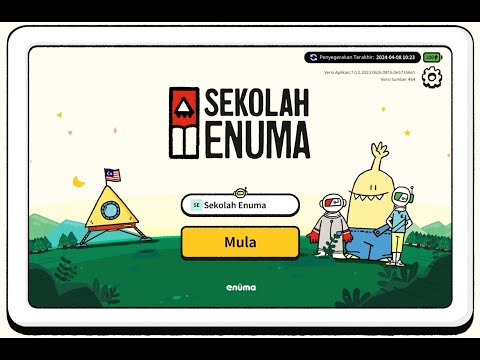
    Malaysia: While localizing Enuma School Malaysia version (Sekolah Enuma), we conducted a 4-month pilot involving 3 regions, 8 schools, and 640+ students. In line with the Ministry of Education’s Dual Language Program, Sekolah Enuma offers language of instruction in both English and Malay. Building on the success of our pilot, we have partnered with 2 local partners to launch a remedial Lab Literasi program in Sabah and Sarawak, for which we have collaborated with the respective state governments. This Lab Literasi program will continue supporting the learning of more than 1,500+ students in 30+ schools and community centers. Pakistan: In partnership with Teach the World Foundation, Kitkit School was distributed to 4,285 out-of-school children. After we proved the usability and learning effectiveness through this successful pilot project, the Sindh Education Foundation (Sindh government) joined this partnership to provide digital learning, under their Digital Accelerated Learning Program initiative, to microschools for 12,500 children to use Enuma School. Together, we aim to expand to the entire Sindh province. Nicaragua: In collaboration with the Inter-American Development Bank (IDB) and the Ministry of Education in Nicaragua, we will launch a Randomized Controlled Trial (RCT) project introducing Enuma School to over 100 public elementary schools in Managua. The purpose of this project is to rigorously assess the efficacy of differentiated instruction in enhancing student learning outcomes. We are proposing a model for a Digital-Based Primary English Language Learning Program at the national level. Korea: Enuma is involved in advancing public education in Korea through two key initiatives. Firstly, Enuma is developing AI digital textbooks, which will be introduced in elementary and secondary schools in 2025, under the Ministry of Education’s AI Digital Textbook initiative. Secondly, we are providing our Todo App series, including Todo One, our tablet-based learning program containing subjects such as Math, English, and Korean, nationwide. With partnerships in place with 44 local governments and 8 Offices of Education, our Todo series is being distributed to a total of 500+ schools, including in Digital Education Innovation schools, special education schools, multicultural schools, etc. In particular, Todo Hangeul (Korean) is being used to help migrant students, with different levels of Korean language proficiency, adjust to public education and follow the curriculum in Korea by providing individualized and adaptive learning.

    Accessibility of Design

    Success iconEnuma does not fulfil the WCAG 2.1 level AA requirements

    Equity of access & Gender

    Get in touch with the organization

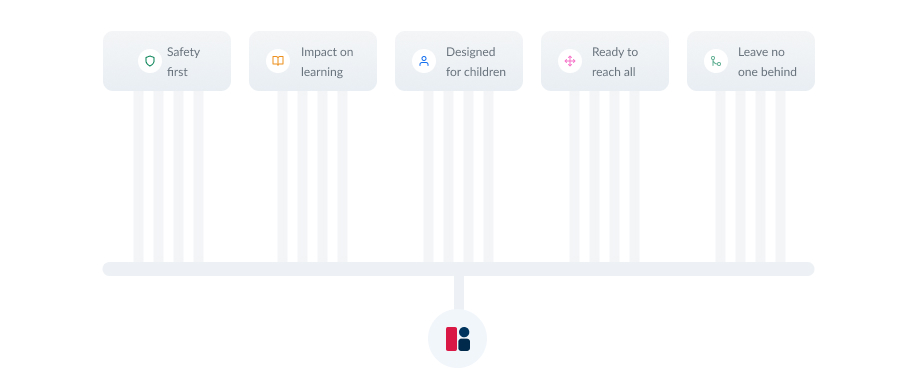
    Diagram explaining the EdTech for Good Framework

    Expert Review of Enuma

    Evaluated using the Learning Cabinet’s rigorous EdTech for Good Framework to ensure safety, learning impact, scalability, and inclusion for all learners.

    EdTech for Good Framework