ST Math

ST Math

ST Math

Mathematics

ST Math is the only PreK–8 supplemental program built on the science of how the brain learns—inviting students to explore, make sense of, and build lasting confidence in math through visual problem solving.
website

Last updated: November 18, 2025

Overview

Learning objectives

The primary learning objective of ST Math is to develop deep conceptual understanding of mathematics through visual, spatial-temporal puzzles that build problem-solving skills and support mastery of state-aligned math standards from PK–8.

Evidence of impact

STRONG

Cost structure

SUBSCRIPTION

Widely adopted in 1 countries

2 languages

Target audience: Educators and teachers, Institutional or administrative staff

Early Childhood Education, Primary Education, Lower Secondary Education

No offline functionality

Tablet, Desktop/Laptop, Chromebook

Thumb Video 1
Thumb Video 2
ST Math

The information presented is provided by the company, and reviewed in good faith. Learning Cabinet is not responsible for inaccurate content.

How this product was evaluated?

Product Details

Data protection and privacy

Privacy

  • Privacy Policy icon
    Privacy PolicyOpen info in a new page
  • Terms of Service icon
    Terms of ServiceOpen info in a new page
  • Product alerts users of significant changes to the privacy policy icon
    Product alerts users of significant changes to the privacy policy

Data Sharing

  • Product does not share data with third parties icon
    Product does not share data with third parties
  • Product does not show external advertisements icon
    Product does not show external advertisements

Data Origin

  • Product does not utilize AI icon
    Product does not utilize AI
  • AI has not been trained using product datasets icon
    AI has not been trained using product datasets

Information security

  • Cybersecurity program in place icon
    Cybersecurity program in place
  • Technical best practices in place icon
    Technical best practices in place
  • Threat detection in place icon
    Threat detection in place
  • Self-assessments have been conducted icon
    Self-assessments have been conducted
  • Third party assessments have been conducted icon
    Third party assessments have been conducted

Safeguards

  • Product does not allow interactions between users and users cannot create content icon
    Product does not allow interactions between users and users cannot create content
  • Product does not use AI to generate content icon
    Product does not use AI to generate content
Theory

ST Math is grounded in neuroscience using spatial-temporal reasoning and visual models to build deep conceptual understanding. The program aligns with state standards and supports mastery through interactive, self-paced puzzles. Its impact is measured through a robust logic model and theory of change, with third-party studies and ESSA-aligned evidence showing improved math outcomes across diverse student populations.

Strong evidence of impact

Impact 3/3

ST Math shows a proven positive impact, backed by at least one experimental study that shows a statistically significant positive impact on the intended learning outcomes.

Different levels of research evidence indicate the reliability of the proof of positive impact. The solutions featured in the Learning Cabinet range from:

  • Strong: Backed by at least one experimental study that shows a statistically significant positive impact on the intended outcomes.
  • Moderate: Backed by at least one quasi-experimental study that shows a statistically significant positive impact on the intended outcomes.
  • Promising: Supported by correlational or pilot research that indicates positive or promising results on the intended outcomes.

Evidence
External Evidence
Quasi-experimental studyOpen
Open link icon

A quasi-experimental WestEd study of ST Math, which was verified by SRI to meet the What Works Clearinghouse (WWC) Tier 2 quality evidence standards was conducted in 2013-16.

Internal Evidence
Correlational StudiesOpen
Open link icon

We used ST Math usage data with Smarter Balance scaled scores for 5565 students at an anonymous California school district in grades 4, 5, & 6 (2022) at 24 schools. The benefits of each 100% Progress of ST Math averaged an expected gain of +39.6.

External Evidence
Award or other recognitionOpen
Open link icon

ST Math is an award-winning program recognized by Tech & Learning, EdTech Digest, ISTE, CODiE, and more from 2022–2025 for excellence in math education, innovation, and impact across diverse learning environments.

Engagement
Icon representing engagement statistics

Recommended use

Early Childhood Education, Primary Education, Lower Secondary Education

Implementation can be tailored to meet each school’s needs, with flexible options including 15–20 minutes daily during the math block (totaling 85 minutes weekly), use as a warm-up or intervention tool (65–85 minutes weekly), or in station rotations (70–85 minutes weekly).

Implementation can be tailored to meet each school’s needs, with flexible options including 15–20 minutes daily during the math block (totaling 85 minutes weekly), use as a warm-up or intervention tool (65–85 minutes weekly), or in station rotations (70–85 minutes weekly).

Icon representing engagement statistics

Target audience

Students
Wide
reach
1
Countries

Learning Objectives

The primary learning objective of ST Math is to develop deep conceptual understanding of mathematics through visual, spatial-temporal puzzles that build problem-solving skills and support mastery of state-aligned math standards from PK–8.

Convocation hat icon

Curriculum

  • National curriculum
  • Adaptable to different curriculums

Information about curriculum

ST Math’s curriculum is designed around a visual, mastery-based approach that builds deep conceptual understanding of mathematics. Aligned to state and national standards (including Common Core and TEKS), the curriculum is structured by grade-level and topic, progressing from foundational concepts to complex problem-solving.

The program uses interactive, language-independent puzzles to teach math concepts, allowing students to experiment, receive immediate feedback, and build mental models. The curriculum emphasizes conceptual learning before symbolic representation, ensuring students understand why math works before learning how to solve it procedurally.

Each learning objective is broken down into scaffolded puzzle sets that support differentiation and personalization, making the curriculum accessible to a wide range of learners. ST Math supports formative assessment through built-in data tools, allowing educators to monitor student progress and intervene as needed.

Pedagogical design

ST Math’s pedagogical design is grounded in neuroscience. Developed by MIND Education, ST Math applies the spatial-temporal reasoning model to help students build deep conceptual understanding of math. The program follows Piagetian principles of learning through visual and concrete experiences, allowing students to engage with math concepts through interactive, language-free puzzles. The product leverages productive struggle and immediate feedback to support mastery-based learning. Students advance only after demonstrating understanding, promoting active prob

Accordion toggle
Additional Details
Flexibility
The product allows learner agency (e.g. it provides flexibility for the learner or teacher to make choices, take actions, or influence their learning outcomes and experiences).
The product supports adaptive personalized learning, including tailoring instruction and content with feedback to the unique needs, preferences, and goals of each learner
Learner engagement
The product has elements that raises the level of affection in learner (e.g. pedagogically meaningful narrative, characters, etc.).
The product has interactive design where a learner can interact with the content via different actions, like for example solving problems.
Creativity
The product includes problem-solving activities
Collaboration
Learner-to-instructor interaction
Instructor-parents/caregivers interaction

User Experience

Accordion toggle
User interface

ST Math ensures an intuitive user interface through user-centered design and continuous usability testing with educators and students. The platform features clean visuals, consistent navigation, and age-appropriate interactions that reduce cognitive load. Regular feedback from teachers and students informs iterative design updates—for example, simplifying dashboard layouts, improving accessibility features, and enhancing in-game guidance to support student independence and reduce teacher intervention.

Open Product Screenshots
Accordion toggle
Data-driven product development

ST Math uses evidence and data insights to drive continuous product improvement by closely analyzing how students interact with the program and how those interactions impact learning outcomes. The product team regularly reviews student performance data, such as puzzle success rates, time on task, and standards mastery, to identify patterns and learning barriers. These insights directly inform updates to content sequencing, in-game supports, and instructional design.

In addition, independent third-party evaluations (e.g., WestEd, WWC, Evidence for ESSA) and internal research studies guide enhancements by validating what works and highlighting areas for refinement. Feedback from educators gathered through surveys, pilot studies, and classroom observations is also integrated into design decisions—ensuring ST Math remains responsive, effective, and aligned with classroom needs.


Accordion toggle
Geographic focus

ST Math was developed with a primary focus on the United States, specifically to align with U.S. state educational standards and classroom environments across PK–8. Its design supports implementation in diverse educational settings across the country, including urban, suburban, and rural school districts. While ST Math is used in other regions, its core development and research have been tailored to meet the needs of U.S.-based educators and students.

Accordion toggle
Ensuring content quality
Expert Review: Content is reviewed by subject matter experts.
Educational Standards Alignment: Content aligns with educational standards.
Evidence-Based Content: Content creation is based on current educational research.
Quality Assurance Processes: Implementation of rigorous quality control measures.
Licensing and Accreditation: Use of licensed and accredited content sources.
Accordion toggle
Supervision and communications
This product is primarily designed for classroom setting
The product includes communications capabilities.
The product automatizes communication processes.
The product makes communication faster for educators / instructors /learners / admins.

Infrastructure

  • Device compatibility
    Tablet, Desktop/Laptop, Chromebook
  • Designed for low-cost devices
    Yes
  • Environment
    Web-Based (Accessible via a web browser without requiring installation on a device)
  • Offline availability
    No offline functionality
  • Connectivity requirements
    1Mbps to 2Mbps
  • Integration with 3rd party
    Single Sign-On or other secure login tools

Support

  • Training materials
    Video tutorials, User manuals, Interactive guides, Webinars, Online courses, Live training
  • Training material languages
    English, Spanish,
  • Training material target users
    Educators and teachers, Institutional or administrative staff
  • Technical support

    Image for Technical support 1
    Email Support

    Image for Technical support 3
    Live Chat Support

Local Adaptability

  • Curriculum / educational content can be customized
    No
  • Visual / audiovisual content can be customized
    No
  • Content can be customized
    Yes
  • Current languages
    English, Spanish
  • Possibility to translate the product to new language
    Yes
  • Licensing information
    • The solution is proprietary

Data import/export

  • Export data capability
    CSV, JSON
  • Exportable data types
    User data, User performance and progress, Assessment results, Usage statistics
  • Import data capability
    User data
  • Automation
    Individual upload/onboarding, Classroom or school level upload by administrator, Large-scale upload at a ministry/institutional level
Affordability

Affordability Card

Business model icon
Business model
  • Business to Consumer (B2C)
  • Business to Government (B2Gov)
  • Business to Business (B2B)
Pricing model icon
Pricing model
  • Subscription
Pricing tiers icon
Pricing tiers
  • District based
  • School based
Convocation hat icon

Pricing available per request

    Ask for details
    Email icon

    Pricing Strategy

    Annual site license fees range from $2,000 - $6,500, depending on enrollment size. Includes access for all users, support, updates, and MIND University PD. 

    Adjustable Pricing Options

    We provide adjustable, context-dependent pricing options for ST Math.

    Organisation and Operations

    Organization Details

    Developed in
    United States
    Type of organization
    Non-profit, Philanthropic organization
    Stage of organization
    Mature
    (since 1998)
    Number of employees
    100-500
    Developed in
    United States
    Type of organization
    Non-profit, Philanthropic organization
    Stage of organization
    Mature
    (since 1998)
    Number of employees
    100-500
    Developed in
    United States
    Type of organization
    Non-profit, Philanthropic organization
    Stage of organization
    Mature
    (since 1998)
    Number of employees
    100-500
    Convocation hat icon

    Experience with large projects

    • Open link iconNationwide government projects
    • Open link iconRegional or state government projects
    • Open link iconLocal government projects
    • Open link iconPartnership models with national institutions
    Case Study Link
    Open link icon

    Large implementation example

    ST Math is currently implemented in 166 schools including all elementary schools and middle schools and Algebra Readiness in the high schools in Fairfax County Public Schools (Fairfax, VA). 

    Accessibility of Design

    Users with disability have been taken into account in the design of the product.
    Success iconST Math fulfils the WCAG 2.1 level AA requirements
    Tool tested with:
    successAutomatic tools
    successExpert validation (using free NVDA screen reader)
    successPerson with disability

    Equity of access & Gender

    Accordion toggle
    Product usage between genders

    The foundational human brain research and theory and models, as well as the deep conceptual learning design goals of the program, via its lowest cognitive load, its innovative visual models that follow rigorous math rules, its requirement for sense-making, and its mastery-to-progress are all applicable equally to girls and boys.

    Get in touch with the organization

    Contact Person picture
    Adoptions and Proposals Manager
    Dr. Kimberly Clark Moss
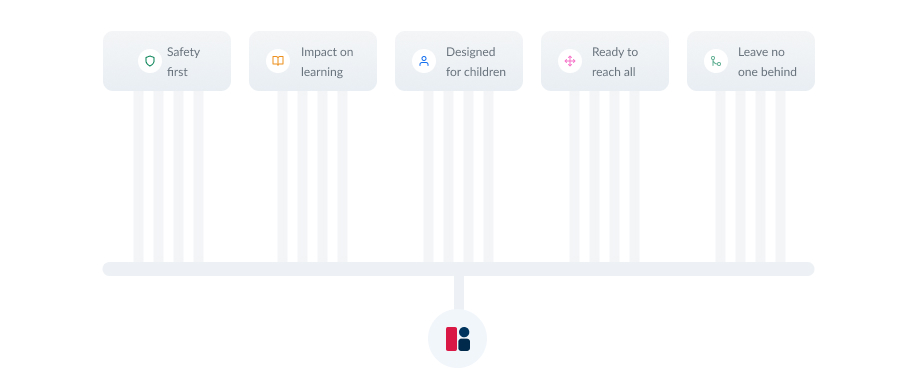
    Diagram explaining the EdTech for Good Framework

    Expert Review of ST Math

    Evaluated using the Learning Cabinet’s rigorous EdTech for Good Framework to ensure safety, learning impact, scalability, and inclusion for all learners.

    EdTech for Good Framework

    Certifications and awards

    Similar Products

    1