Learning Objectives
ThingLink empowers users to create or engage with immersive, experience-based learning environments that support knowledge construction through interaction and exploration.

STEM
Pedagogical competencies
Virtual learning, Immersive learning
Last updated: December 2, 2025
ThingLink empowers users to create or engage with immersive, experience-based learning environments that support knowledge construction through interaction and exploration.
Widely adopted in 12 countries
23 languages
Target audience: Educators and teachers, Students, Institutional or administrative staff
Grade: Primary Education, Lower Secondary Education, Upper Secondary Education, Technical and Vocational Education, Tertiary Education, Non-formal Education, Workforce Upskilling
Limited offline functionality
The information presented is provided by the company, and reviewed in good faith. Learning Cabinet is not responsible for inaccurate content.
How this product was evaluated?ThingLink’s design draws on Vygotsky’s socio-cultural theory, using technology as a mediating tool that fosters active learning in context. By layering digital information onto images and physical environments, it transforms digital or physical environments into interactive learning spaces where learners co-construct meaning. Educators build immersive, standards-aligned tasks, while built-in analytics track engagement and responses, allowing iterative design based on real-time learner data.
ThingLink has evidence from multiple contexts or longitudinal studies.
Different levels of research evidence indicate the reliability of the proof of positive impact. The tools featured in the Learning Cabinet range from:
This overview highlights independent research where ThingLink was used to implement teaching methods, adapt materials, or assess learner impact. All studies were conducted by external institutions, offering objective insights into its educational use
Examples of ThingLink in action from around the world. Inspiring ways to use ThingLink which we hope will spark your creativity. Qualitative and quantitative data from users which show the difference ThingLink can make to your project.
Recommended use
ThingLink is integrated in curriculum-aligned courses like STEAM, history, and digital skills. Students typically use it 1–2 times per week to document work on every class unit. It supports both individual and group use, with session length varying by content complexity and instructional approach.
Target audience
ThingLink empowers users to create or engage with immersive, experience-based learning environments that support knowledge construction through interaction and exploration.
ThingLink’s pedagogical design is rooted in Vygotsky’s socio-cultural theory, where learning is seen as interactive and socially mediated. By embedding multimedia hotspots in images and virtual environments, the platform guides exploration and supports scaffolding within the learner’s zone of proximal development. While based on this theory, ThingLink is flexible and supports other pedagogies like constructivism and experiential learning. Educators can customize content to fit learning goals, while learners engage actively by experiencing interactive experiences or creating their own projects.
ThingLink uses both user-generated feedback and data insights to perform continuous product enhancements. Open feedback and quantitative data are regularly collected from users, with feature requests and improvement suggestions reviewed and evaluated on a weekly basis. Relevant input is incorporated into the product development process and contributes directly to shaping the roadmap. In addition, the team reviews up-to-date public research papers to assess findings and evaluate product performance, ensuring developments are grounded in educational impact and evidence. Case studies are also conducted and shared on the company blog, offering further evidence of ThingLink’s effect on learning and informing future improvements.
Our product was designed from the outset for a global audience, without targeting any specific geographic region. We've prioritized international accessibility by supporting multiple languages and ensuring usability for users across different regions of the world.
ThingLink follows a subscription-based pricing strategy with multiple tiers tailored to the needs of educators, businesses, and enterprises of various sizes. These plans accommodate a wide range of use cases, from individual creators to district-wide or enterprise-level implementations. While pricing tiers often include suggested user counts and features, all packages can be customized based on the specific needs and size of the institution or organization. For example, educators can choose from individual teacher plans starting at $108 per year, while larger institutions can opt for school, campus, or district-wide licenses with custom pricing. Business users have access to plans ranging from individual creator accounts to enterprise solutions. In addition to its flexible licensing model, ThingLink offers free upgrades for teacher trainers, partnership opportunities and referral programs, and provides discounts for multi-year agreements.
Yes. This approach ensures that pricing remains fair and accessible across different regions and institutional contexts. Licenses can always be tailored based on specific needs such as organizational size, usage scope, and budget constraints, allowing for flexible solutions that suit both parties.

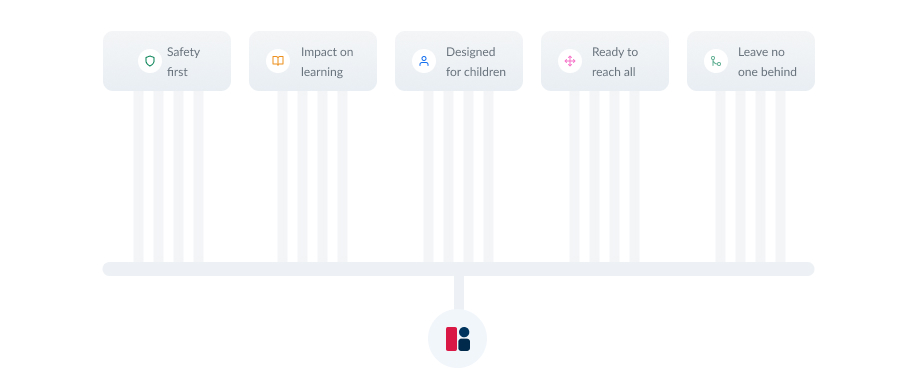
Evaluated using the Learning Cabinet’s rigorous EdTech for Good Framework to ensure safety, learning impact, scalability, and inclusion for all learners.
Read Along is a reading app that helps young learners have fun while they learn to read. Read Along has an in-app reading buddy that supports learners as they read aloud, offering assistance when they struggle, plus rewards them with stars when they do well – guiding them along as they progress.
Angaza Elimu(Kalamu) is an AI powered adaptive and interactive eLearning platform delivering personalised learning experience to learners and amplifying their engagement with teachers.