Tilli Logo

Tilli

Tilli

Pedagogical competencies

21st century skills

Social Emotional Learning

Tilli is a Stanford-incubated toolkit for K-5 classrooms that measures and builds 12 foundational cognitive and social-emotional learning skills in children before they enter sixth grade.

website

Last updated: February 11, 2026

Overview

Learning objectives

The primary learning objective of Tilli is to build and measure eight foundational cognitive and social-emotional skills in children by their 10th birthday, equipping them with the tools for lifelong emotional well-being and success.

Evidence of impact

STRONG

Cost structure

ONE-TIME PAYMENT

6 languages

Target audience: Educators and teachers, Institutional or administrative staff, Parents or guardians

Grade: Early Childhood Education, Primary Education

No offline functionality

Thumb Video 1
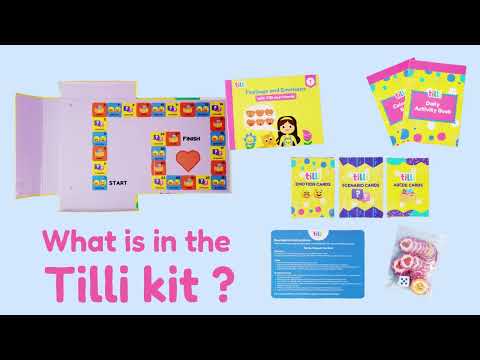
Thumb Video 2
User interacting with the Product
Scenario Card_Kit
ABCDE cards_Coping Cards
Emotion Cards
Tilli Learning Kit

The information presented is provided by the company, and reviewed in good faith. Learning Cabinet is not responsible for inaccurate content.

How this product was evaluated?

Product Details

Data protection and privacy

Privacy

  • Privacy Policy icon
    Privacy PolicyOpen info in a new page
  • Terms of Service icon
    Terms of ServiceOpen info in a new page
  • Product alerts users of significant changes to the privacy policy icon
    Product alerts users of significant changes to the privacy policy

Data Sharing

  • Product does not share data with third parties icon
    Product does not share data with third parties
  • Product does not show external advertisements icon
    Product does not show external advertisements

Data Origin

  • Product utilizes AI icon
    Product utilizes AI
  • AI has not been trained using product datasets icon
    AI has not been trained using product datasets

Information security

  • No cybersecurity program in place icon
    No cybersecurity program in place
  • Technical best practices in place icon
    Technical best practices in place
  • Threat detection in place icon
    Threat detection in place
  • No self-assessments conducted icon
    No self-assessments conducted
  • No third party assessments conducted icon
    No third party assessments conducted

Safeguards

  • Product does not allow interactions between users and users cannot create content icon
    Product does not allow interactions between users and users cannot create content
  • Product uses AI to generate content icon
    Product uses AI to generate content
  • Product has AI guardrails in place icon
    Product has AI guardrails in place
  • Accuracy of machine-generated content is checked icon
    Accuracy of machine-generated content is checked
Theory

Tilli was built through 4 years of research at Stanford University and is grounded in developmental psychology and behavioral sciences. Tilli's "phy-digital" (physical + digital) approach progressively measures and builds 12 foundational skills - 6 core executive functions and 6 social-emotional learning skills. Our theory of change is that a blend of play-based learning, 360 assessments, and data-driven personalization is the most effective way to build foundational skills.

Strong evidence of impact

Impact 3/3

Tilli has evidence from multiple contexts or longitudinal studies.

Different levels of research evidence indicate the reliability of the proof of positive impact. The tools featured in the Learning Cabinet range from:

  • Strong: Evidence from multiple contexts or longitudinal studies.
  • Moderate: External evaluation with transparent methods.
  • Promising: Small pilot or expert review with documented outcomes.

Evidence
External Evidence
Data-Driven InsightsOpen
Open link icon

Used by 36,000+ learners, Tilli helped 4 in 5 caregivers better understand emotions, while 9 in 10 children built positive coping skills—reported by Save the Children and UNICEF Sri Lanka.

Engagement
Icon representing engagement statistics

Recommended use

ISCED 0 - Early Childhood, ISCED 1 - Primary

Each child should spend 30 minutes weekly with Tilli’s in-class interventions, supported by teacher-led activities and home practice, together creating a seamless, well-rounded learning experience across school and home.

Each child should spend 30 minutes weekly with Tilli’s in-class interventions, supported by teacher-led activities and home practice, together creating a seamless, well-rounded learning experience across school and home.

Icon representing engagement statistics

Target audience

School administrators, Students, Teachers, Other
Limited
reach

Learning Objectives

The primary learning objective of Tilli is to build and measure eight foundational cognitive and social-emotional skills in children by their 10th birthday, equipping them with the tools for lifelong emotional well-being and success.

Convocation hat icon

Curriculum

  • Global curricular frameworks

Information about curriculum

The primary learning objective of Tilli is to build and measure eight foundational cognitive and social-emotional skills in children by their 10th birthday, equipping them with the tools for lifelong emotional well-being and success.

Pedagogical design

Tilli's pedagogy is rooted in developmental psychology and behavioral science. It uses a 'phygital' (physical + digital) model that blends play-based learning (constructivism) with AI-driven, personalized interventions based on real-time data. This creates an engaging, outcomes-driven journey using a Learn-Apply-Reflect-Measure cycle to build foundational skills during the critical early years window, ensuring learning is effective and targeted.

Accordion toggle
Additional Details
Flexibility
The product allows learner agency (e.g. it provides flexibility for the learner or teacher to make choices, take actions, or influence their learning outcomes and experiences).
Learner engagement
The product has elements that raises the level of affection in learner (e.g. pedagogically meaningful narrative, characters, etc.).
The product has interactive design where a learner can interact with the content via different actions, like for example solving problems.
Creativity
The product includes problem-solving activities
Collaboration
Learner-to-learner interaction
Learner-to-instructor interaction
Instructor-parents/caregivers interaction
Learner-parents interaction

User Experience

Accordion toggle
User interface

We have ensured an intuitive user interface through a continuous cycle of usability testing, feedback integration, and design refinements. For example, we conducted structured usability tests with both children and parents to observe how they navigated the app, identified points of confusion, and tested whether prompts were easily understood without adult intervention. Based on these insights, we introduced voice narration and audio guidance for younger users who struggled with reading, refined the language and instructions to reduce complexity, and standardized navigation patterns across all sections for consistency. We also implemented clearer visual cues and rewards (such as streak tracking, stars, and heart tokens) to help children understand progress intuitively. To validate improvements, we repeated usability tests after each iteration, ensuring that updates not only addressed prior pain points but also enhanced overall accessibility and engagement for both age groups.

Open Product Screenshots
Accordion toggle
Data-driven product development

We use a combination of assessment data and user feedback to guide product improvements. Assessment insights show us how students are progressing across key skills and where they face challenges, while engagement data highlights which activities are most effective. By analyzing these patterns, we refine prompts, add scaffolding where needed, and design advanced activities for students ready to progress further. This ensures that every enhancement is evidence-driven and directly linked to improving learning outcomes.

Accordion toggle
Ensuring content quality
Expert Review: Content is reviewed by subject matter experts.
User Feedback Incorporation: Regular updates are informed by user feedback.
Evidence-Based Content: Content creation is based on current educational research.
Accordion toggle
Supervision and communications
This product is primarily designed for classroom setting
The product includes communications capabilities.
The product makes communication faster for educators / instructors /learners / admins.

Infrastructure

  • Device compatibility
    Smartphone, Tablet, Desktop/Laptop, Chromebook
  • Designed for low-cost devices
    Yes
  • Environment
    Web-Based (Accessible via a web browser without requiring installation on a device), Device Installable (Requires installation on a device to be used, i.e. a mobile or desktop app)
  • Offline availability
    No offline functionality
  • Connectivity requirements
    256Kbps to 512Kbps
  • Integration with 3rd party

Support

  • Training materials
    Video tutorials, User manuals, Interactive guides, Webinars, Community forum, Live training
  • Training material languages
    Arabic, English, Hindi, Kannada, Sinhala, Tamil
  • Training material target users
    Educators and teachers, Institutional or administrative staff, Parents or guardians
  • Technical support

    Image for Technical support 1
    Email Support

    Image for Technical support 3
    Chatbot Support

    Image for Technical support 5
    Phone/Call Support

    Image for Technical support 7
    Community Forums/Support

Local Adaptability

  • Curriculum / educational content can be customized
    Yes
  • Visual / audiovisual content can be customized
    Yes
  • Content can be customized
    No
  • Current languages
    Arabic, English, Hindi, Kannada, Sinhala, Tamil
  • Possibility to translate the product to new language
    Yes
  • Licensing information
    • The solution is proprietary
    • The content is open source
    • The software is open source

Data import/export

  • Export data capability
    CSV, JSON, API
  • Exportable data types
    User data, Product usage data, User performance and progress, Assessment results, Usage statistics, Course content, Communication logs
  • Import data capability
  • Automation
    Individual upload/onboarding, Classroom or school level upload by administrator
Affordability

Affordability Card

Business model icon
Business model
  • Business to Business (B2B)
Pricing model icon
Pricing model
  • One-time payment
Pricing tiers icon
Pricing tiers
  • Per student
Convocation hat icon

Pricing available per request

    Ask for details
    Email icon

    Pricing Strategy

    Tilli offers a flexible, tiered pricing strategy tailored to schools, nonprofits, and governments. Our core curriculum + classroom kit + app bundle is priced at $12–$18 per learner annually, depending on scale and customization. This includes our year around curriculum, physical SEL kits, app access, teacher training, and dashboards. For low-income or underserved communities, we offer sliding-scale pricing or subsidized models through donor partnerships. We also provide volume-based discounts for deployments above 1,000 learners and pilot pricing for first-time partners.

    Adjustable Pricing Options

    Yes, Tilli offers context-dependent pricing based on geographic and economic factors, including purchasing power parity (PPP). For partners in low- and middle-income countries, we offer subsidized or donor-backed pricing models. Our indicative annual starting price per user is $12, which includes the physical SEL kit, app access, training, and dashboards. Pricing can be further adjusted based on deployment scale and local customization needs.

    Organisation and Operations

    Organization Details

    Developed in
    N/A
    Type of organization
    Business enterprise
    Stage of organization
    Growth Phase
    Number of employees
    5-10
    Developed in
    N/A
    Type of organization
    Business enterprise
    Stage of organization
    Growth Phase
    Number of employees
    5-10
    Developed in
    N/A
    Type of organization
    Business enterprise
    Stage of organization
    Growth Phase
    Number of employees
    5-10
    Convocation hat icon

    Experience with large projects

    • Open link iconLocal government projects
    • Open link iconPartnership models with national institutions
    Case Study Link
    Open link icon

    Large implementation example

    • In 2020, Tilli conducted an extensive at-home SEL study across 8 countries, engaging 200+ families and 100+ teachers. 
    • In partnership with UNICEF and Save the Children, we reached over 17 schools and learning centers across Sri Lanka impacting over 3,000 learners and 100 caregivers and social workers. 
    • In 2025, we implemented Tilli across 18 Hippocampus School branches in India reaching 3,554 students and 120 teachers. 
    • In 2025, we kicked off our partnership with Leeds International School in Srilanka to bring Tilli to 17 of their branches reaching 4,650 students and 114 teachers. 
    • Tilli will be implemented across multiple UNRWA refugee schools in Jordan impacting 180 grade 1 teachers, 7000 learners and 63 education specialists and counselors. 

    Accessibility of Design

    Success iconTilli does not fulfil the WCAG 2.1 level AA requirements

    Equity of access & Gender

    Get in touch with the organization

    Contact Person picture
    CEO and Founder
    Kavindya Thennakoon
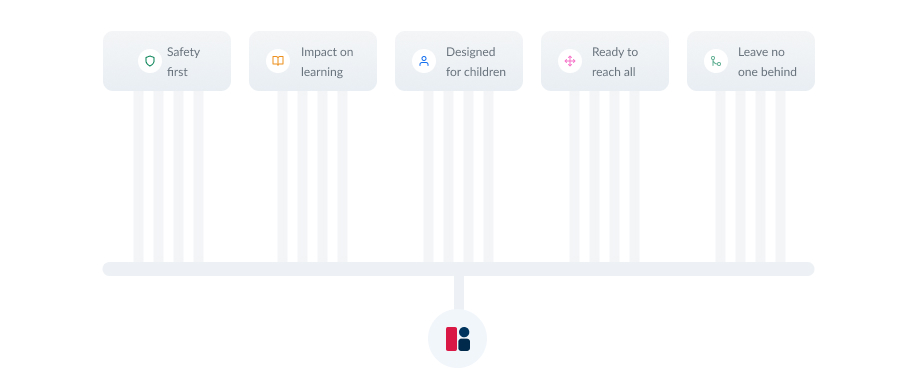
    Diagram explaining the EdTech for Good Framework

    Expert Review of Tilli

    Evaluated using the Learning Cabinet’s rigorous EdTech for Good Framework to ensure safety, learning impact, scalability, and inclusion for all learners.

    EdTech for Good Framework

    Compare Tools

    Newly listed
    Tilli logo

    Tilli

    Pedagogical competencies21st century skillsSocial Emotional Learning

    Tilli is a Stanford-incubated toolkit for K-5 classrooms that measures and builds 12 foundational cognitive and social-emotional learning skills in children before they enter sixth grade.

    Enuma logo

    Enuma

    MathematicsLiteracy (Reading & Writing)Languages21st century skills

    Enuma School is a personalized, inclusive, and tablet-based learning application designed to help children develop foundational literacy and numeracy skills at their own pace.

    Newly listed
    Matific logo

    Matific

    21st century skillsSTEMMathematics

    Matific is an AI-powered digital maths and financial literacy platform that builds students’ understanding, confidence, and real-world problem-solving skills through hands-on gameplay, while giving teachers adaptive tools, insights, and comprehensive reporting to enhance learning outcomes.

    Mindspark logo

    Mindspark

    MathematicsSTEMLiteracy (Reading & Writing)21st century skills

    Transforming South African Education Through Personalized, Adaptive Learning in Mathematics and English, Empowering Children to Understand and Thrive.

    1