Playlab.ai logo

Playlab.ai

Playlab.ai

Pedagogical competencies

Literacy (Reading & Writing)

STEM

Mathematics

Languages

History

21st century skills

AI app development

Playlab builds software for a global community to create educational AI applications that reflect their needs & values; we support educators and learners worldwide through education and they use Playlab to create, discover, experiment, share, and deploy educational AI – fostering a dynamic ecosystem
website

Last updated: August 26, 2026

Overview

Learning objectives

To empower educators to responsibly use AI to enhance teaching and learning by creating, testing, and sharing personalized AI applications designed for their specific educational environments.

Evidence of impact

MODERATE

Cost structure

2 Pricing models

Widely adopted in 5 countries

2 languages

Target audience: Educators and teachers, Students, Institutional or administrative staff

Grade: Lower Secondary Education, Upper Secondary Education, Technical and Vocational Education, Tertiary Education, Non-formal Education, Workforce Upskilling

No offline functionality

Thumb Video 1

The information presented is provided by the company, and reviewed in good faith. Learning Cabinet is not responsible for inaccurate content.

How this product was evaluated?

Product Details

Data protection and privacy

Privacy

  • Privacy Policy icon
    Privacy PolicyOpen info in a new page
  • Terms of Service icon
    Terms of ServiceOpen info in a new page
  • Product alerts users of significant changes to the privacy policy icon
    Product alerts users of significant changes to the privacy policy

Data Sharing

  • Product does not share data with third parties icon
    Product does not share data with third parties
  • Product shows external advertisements icon
    Product shows external advertisements

Data Origin

  • Product utilizes AI icon
    Product utilizes AI
  • AI has not been trained using product datasets icon
    AI has not been trained using product datasets

Information security

  • Cybersecurity program in place icon
    Cybersecurity program in place
  • Technical best practices in place icon
    Technical best practices in place
  • Threat detection in place icon
    Threat detection in place
  • Self-assessments have been conducted icon
    Self-assessments have been conducted
  • Third party assessments have been conducted icon
    Third party assessments have been conducted

Safeguards

  • Product does not allow interactions between users and users cannot create content icon
    Product does not allow interactions between users and users cannot create content
  • Product uses AI to generate content icon
    Product uses AI to generate content
  • Product has AI guardrails in place icon
    Product has AI guardrails in place
  • Accuracy of machine-generated content is checked icon
    Accuracy of machine-generated content is checked
Theory

Playlab's approach lets educators and students design their own classroom AI tools rather than rely on AI built elsewhere, emphasizing agency-driven, mastery-based learning—brought to life through its AI Lab Schools R&D program—while measuring impact through built-in analytics and a view of outcomes that looks beyond standardized scores to student well-being, relationships, and human skills.

Moderate evidence of impact

Impact 2/3

Playlab.ai has external evaluation with transparent methods.

Different levels of research evidence indicate the reliability of the proof of positive impact. The tools featured in the Learning Cabinet range from:

  • Strong: Evidence from multiple contexts or longitudinal studies.
  • Moderate: External evaluation with transparent methods.
  • Promising: Small pilot or expert review with documented outcomes.

Evidence
External Evidence
Other Academic StudyOpen
Open link icon

The Playlab partnerships indicate that the adoption of AI accelerates when implemented contextually, with high leverage entry points, sustained support, and leadership engagement. This is supported by case studies, user interviews, correlational stud

External Evidence
Case StudiesOpen
Open link icon

Playlab partnerships demonstrate accelerated AI adoption through contextual implementation, high-leverage entry points, sustained support, and leadership engagement. This holds true whether educators are creating tools or utilizing AI companions.

Engagement
Icon representing engagement statistics

Recommended use

ISCED 2 - Lower Secondary, ISCED 3 - Upper Secondary, Technical and Vocational, Tertiary, Non-formal, Workforce Upskilling

We suggest dedicating around 6-8 hours to familiarize yourself with Playlab's AI building tools. Skilled users can enhance their abilities as new features are introduced. The frequency of use varies depending on the tool, with curriculum tools requiring regular usage and administrative tools.

We suggest dedicating around 6-8 hours to familiarize yourself with Playlab's AI building tools. Skilled users can enhance their abilities as new features are introduced. The frequency of use varies depending on the tool, with curriculum tools requiring regular usage and administrative tools.

Icon representing engagement statistics

Target audience

School administrators, Students, Teachers
Limited
reach
150%
User growth rate
5
Countries

Learning Objectives

To empower educators to responsibly use AI to enhance teaching and learning by creating, testing, and sharing personalized AI applications designed for their specific educational environments.

Convocation hat icon

Curriculum

  • National curriculum
  • Global curricular frameworks
  • Adaptable to different curriculums

Information about curriculum

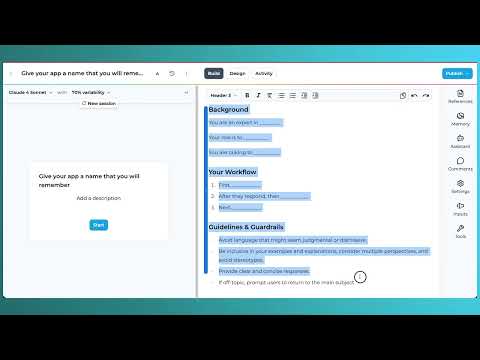
Playlab allows builders to easily include up to 100 "reference documents" in any app. These documents can contain rubrics, curriculum materials, and other educational resources. Playlab apps are designed to prioritize these reference documents, enabling educators to integrate educational theories of their choice. We have included features that guide builders in writing instructions for the app and are developing mechanisms to assess if the app meets its stated goals by analyzing user-chat interactions. These are some of the ways we are adapting the Playlab system to support educators interested in effective teaching practices.

Pedagogical design

Playlab allows builders to seamlessly incorporate up to 100 "reference documents" in any app. These documents may contain rubrics, curriculum, and other pedagogical resources. Playlab apps are designed to prioritize these documents, giving educators the flexibility to integrate varying levels of educational theory. We provide guidance to help builders write clear instructions for the AI and are developing mechanisms to assess if the app meets its defined goals.

Accordion toggle
Additional Details
Flexibility
The product allows learner agency (e.g. it provides flexibility for the learner or teacher to make choices, take actions, or influence their learning outcomes and experiences).
The product supports adaptive personalized learning, including tailoring instruction and content with feedback to the unique needs, preferences, and goals of each learner
Playlab apps are inherently interactive via AI chat. Builders can add engagement mechanics like games, leaderboards, and imaginative scenarios.
Learner engagement
The product has elements that raises the level of affection in learner (e.g. pedagogically meaningful narrative, characters, etc.).
The product has interactive design where a learner can interact with the content via different actions, like for example solving problems.
Creativity
The product allows content creation
The product includes problem-solving activities
Playlab is an extraordinary canvas for creativity: Builders can create whatever they can imagine!
Collaboration
Learner-to-instructor interaction
Instructor-parents/caregivers interaction
Learner-parents interaction

User Experience

Accordion toggle
User interface

Ensuring an intuitive user interface is a key focus for Playlab in building and enhancing its products. Rather than solely relying on internal assumptions about user needs, Playlab has integrated continuous and structured feedback loops into its engineering and product development process. 

Central to this approach is the ongoing communication between the engineering team and the platform's users. Engineers actively engage in in-person workshops, both domestically and internationally, where they collaborate directly with users for several days. Through this hands-on approach, they observe challenges, identify usability issues, and jointly develop solutions in real-time. This method surpasses traditional usability testing by incorporating real user experiences into design decisions. 

To maintain feedback beyond workshops, Playlab utilizes dedicated Slack channels where users can provide critiques, report issues, and suggest improvements consistently. This ensures that user feedback informs the product roadmap continuously, rather than being gathered sporadically. 

Moreover, Playlab has formed a Product Advisory Committee comprising more than 15 prominent users who have direct access to the entire engineering team and the CEO. This structure ensures that valuable usability insights are promptly shared with decision-makers and influence the prioritization of new features.


Open Product Screenshots
Accordion toggle
Data-driven product development

The Playlab engineering team maintains close communication with users to develop infrastructure improvements. Feedback from the community of builders is regularly considered when prioritizing new features. Playlab has implemented various mechanisms to enhance feedback, including engineers dedicating multiple days to in-person workshops with builders in the US and worldwide, maintaining Slack channels for feedback collection, establishing a Product Advisory Committee with more than 15 prominent users for direct communication with the engineering team and CEO, and creating "Lab Schools" as test groups for new features and developments, gathering data on feature effectiveness to inform Playlab's decisions.

Accordion toggle
Geographic focus

The original language of Playlab is English. We have already incorporated Spanish as a key language and anticipate adding several more languages in 2026.

Accordion toggle
Ensuring content quality
Expert Review: Content is reviewed by subject matter experts.
Educational Standards Alignment: Content aligns with educational standards.
User Feedback Incorporation: Regular updates are informed by user feedback.
Evidence-Based Content: Content creation is based on current educational research.
Quality Assurance Processes: Implementation of rigorous quality control measures.
Editorial Oversight: Editorial teams oversee content development and accuracy.
Licensing and Accreditation: Use of licensed and accredited content sources.
Language Accuracy: Content undergoes professional linguistic and grammar checks.
Accordion toggle
Supervision and communications
The product includes communications capabilities.
The product automatizes communication processes.
The product makes communication faster for educators / instructors /learners / admins.

Infrastructure

  • Device compatibility
    Smartphone, Tablet, Desktop/Laptop, Chromebook, Accessibility reader
  • Designed for low-cost devices
    Yes
  • Environment
    Web-Based (Accessible via a web browser without requiring installation on a device)
  • Offline availability
    No offline functionality
  • Connectivity requirements
    5Mbps and above
  • Integration with 3rd party
    Education/Learning Data tools, Single Sign-On or other secure login tools, LMS platforms

Support

  • Training materials
    Video tutorials, User manuals, Interactive guides, Webinars, Online courses, Community forum, Live training
  • Training material languages
    English, Spanish
  • Training material target users
    Educators and teachers, Students, Institutional or administrative staff
  • Technical support

    Image for Technical support 1
    Email Support

    Image for Technical support 3
    Chatbot Support

    Image for Technical support 5
    Community Forums/Support

    Image for Technical support 8
    Weekly office hours and 1:1 coaching

Local Adaptability

  • Curriculum / educational content can be customized
    Yes
  • Visual / audiovisual content can be customized
    Yes
  • Content can be customized
    Yes
  • Current languages
    English, Spanish
  • Possibility to translate the product to new language
    Yes
  • Current writing systems
    Arabic, Chinese, Cyrillic, Indic Scripts, Latin Alphabet
  • Licensing information
    • The content is open source
    • The software is open source
  • Is the product a Digital Public Good (DPG)
    No

Data import/export

  • Export / import availability
  • Export data capability
    CSV, JSON,
  • Exportable data types
    User data, Product usage data, Usage statistics, Conversation data, analytics across apps
  • Import data capability
    PDF, DOCX, TXT, JPG, PNG, JSON, XLSX
  • Automation
    Individual upload/onboarding, Classroom or school level upload by administrator, Large-scale upload at a ministry/institutional level
Affordability

Affordability Card

Business model icon
Business model
  • Business to Government (B2Gov)
  • Business to Business (B2B)
Pricing model icon
Pricing model
  • Free
  • Freemium/Premium
Pricing tiers icon
Pricing tiers
  • District based
  • National
  • School based
Convocation hat icon

Pricing available per request

    Ask for details
    Email icon

    Pricing Strategy

    The Playlab platform is currently free and accessible by invitation only. Here is an overview of its pricing strategy:

    • Current Model:
      • Free access is provided through an invitation-only system.
      • Access can be obtained by attending Intro to Playlab workshops, receiving workspace invitations, or through partnership arrangements.
      • No subscription fees are mentioned for basic access.
    • Professional Development (Optional Paid Services):
      • Organizations can host workshops for free using Playlab materials.
      • Virtual facilitation is priced at $2,500 per PLC series or Design Sprint (for up to 150 seats).
      • In-person facilitation is available with custom pricing based on location.
    • Enterprise Features:
      • Custom organizational knowledge graphs.
      • Clever SSO integration for districts.
      • Data export capabilities.

    It is important to note that Playlab operates as a nonprofit organization with a focus on responsible AI in education, prioritizing access over revenue.

    Adjustable Pricing Options

    We collaborate closely with philanthropic organizations to make sure that our technology is accessible to a wide audience.

    Organisation and Operations

    Organization Details

    Developed in
    United States
    Type of organization
    Non-profit, Philanthropic organization
    Stage of organization
    Growth Phase
    Number of employees
    25-50
    Developed in
    United States
    Type of organization
    Non-profit, Philanthropic organization
    Stage of organization
    Growth Phase
    Number of employees
    25-50
    Developed in
    United States
    Type of organization
    Non-profit, Philanthropic organization
    Stage of organization
    Growth Phase
    Number of employees
    25-50
    Convocation hat icon

    Experience with large projects

    • Open link iconNationwide government projects
    • Open link iconRegional or state government projects
    • Open link iconLocal government projects
    • Open link iconPartnership models with national institutions
    Case Study Link
    Open link icon

    Large implementation example

    TOP 5 LARGEST PROJECTS:

    1. California Community Colleges (2.1 million students, 116 colleges) 🏆
    Largest higher education system in the US
    $350,000 revenue
    Faculty AI literacy at a massive scale

    2. Ghana National Initiative (1.4 million students, 68,000 teachers, 712 schools) 🌍
    Partnership with the Ministry of Education
    National AI-enabled teacher companion app
    Illustrates international scale

    3. North Carolina Statewide (1.5 million students, 2,600 schools) 🏛️
    Supported by the State Department of Education
    Backed by Amazon
    Fully implemented statewide

    4. KIPP Foundation National (122,000 students, 279 schools) 🎓
    Leading charter network in the US
    $105,000 revenue
    Standardizing across multiple regions

    5. Fairfax County VA (180,000 students, 199 schools) 🏫
    9th largest district in the US
    Partnered with Amazon
    Implementation in progress

    Accessibility of Design

    Users with disability have been taken into account in the design of the product.
    Success iconPlaylab.ai fulfils the WCAG 2.1 level AA requirements
    Tool tested with:
    successAutomatic tools
    successPerson with disability

    Equity of access & Gender

    Accordion toggle
    Product usage between genders

    As an infrastructure, Playlab is gender-neutral. As an organization, Playlab collaborates closely with educators to ensure that their voices and contexts are represented in the apps they create. Guardrails have been implemented in the infrastructure to facilitate moderation and prevent the development of inflammatory or biased applications.

    Get in touch with the organization

    Contact Person picture
    Quality Assurance Representative and Learning Partner, Africa
    Teimosa Martin
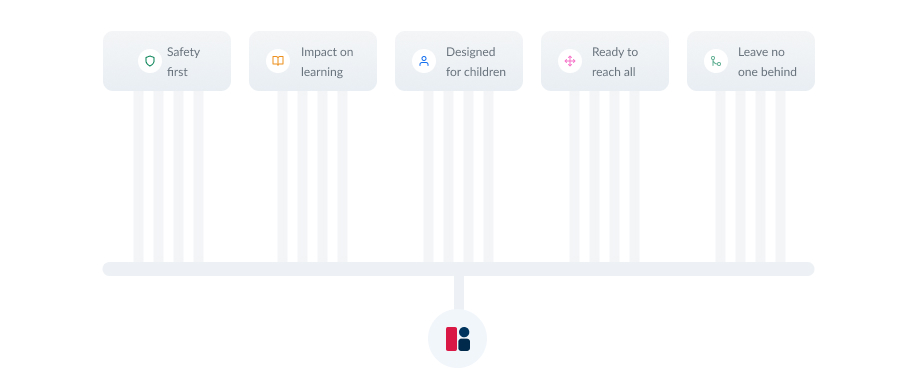
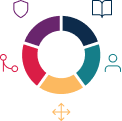
    Diagram explaining the EdTech for Good Framework

    Expert Review of Playlab.ai

    Evaluated using the Learning Cabinet’s rigorous EdTech for Good Framework to ensure safety, learning impact, scalability, and inclusion for all learners.

    EdTech for Good Framework

    Learning Cabinet review

    Playlab.ai has been evaluated by the Learning Cabinet expert team using the EdTech for Good Framework.

    Certifications

    SOC 2
    SOC 2/2026/Member, EdSafe AI Alliance Industry Council/Official website

    Compare

    Newly listed
    Playlab.ai logo

    Playlab.ai

    Pedagogical competenciesLiteracy (Reading & Writing)STEMMathematicsLanguagesHistory21st century skillsAI app development

    Playlab builds software for a global community to create educational AI applications that reflect their needs & values; we support educators and learners worldwide through education and they use Playlab to create, discover, experiment, share, and deploy educational AI – fostering a dynamic ecosystem

    eKidz.eu logo

    eKidz.eu

    Literacy (Reading & Writing)Languages

    eKidz is an award-winning app that makes acquiring literacy and a new language easy and accessible for every child utilizing a purpose-built AI voice recognition students with precise diagnostics and support.

    Microsoft Reading Progress logo

    Microsoft Reading Progress

    Literacy (Reading & Writing)Languages

    Support reading fluency in over 100 languages and dialects with AI-powered assignment creation, review, and insights across accuracy, expression and comprehension.

    Mindspark logo

    Mindspark

    MathematicsSTEMLiteracy (Reading & Writing)21st century skills

    Transforming South African Education Through Personalized, Adaptive Learning in Mathematics and English, Empowering Children to Understand and Thrive.

    1